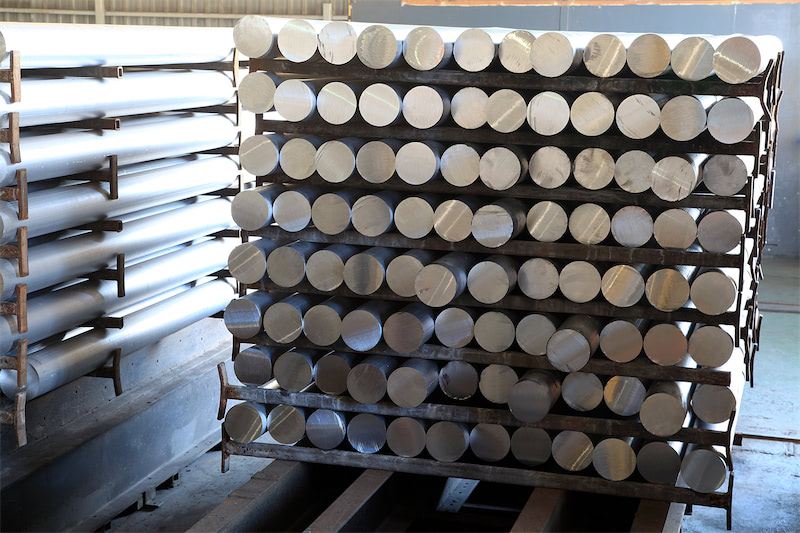
On February 28, 2026, a large-scale military strike launched by Israel and the US against Iran led to a sharp deterioration in the Middle East's geopolitical situation, rapidly impacting global commodity markets and multidimensionally affecting the global primary aluminum (aluminum) industry, mainly through supply chain disruptions and rising production costs.
In terms of aluminum supply, the conflict's impact may manifest as both direct and indirect effects, threatening Iran's domestic capacity while also disrupting shipping through the Strait of Hormuz, affecting the entire Middle Eastern aluminum industry and thus impacting global supply balance.
I. Iran's Domestic Aluminum Capacity Faces Shutdown or Significant Production Cuts
- As a key aluminum producer in the Middle East, Iran had an existing capacity of 660,000 mt and actual production of 620,000 mt in 2025, accounting for about 0.8% of global output. The military strikes, targeting core infrastructure such as power and industrial facilities, will likely lead to complete shutdowns or significant production cuts, potentially reducing global primary aluminum supply by nearly 600,000 mt/year. With sanctions and other factors, resuming production will be extremely difficult.
- More critically, Iran's aluminum production is highly dependent on imported alumina, with a demand of approximately 1.24 million mt in 2025, of which only 250,000 mt (20% of demand) was produced domestically, and 80% needed to be imported (mainly from India). If the war disrupts ports and logistics, preventing imported alumina from entering, the local capacity can only support 125,000 mt of aluminum production, meaning about 80% of the capacity will stall due to raw material shortages, further amplifying the supply shock.
II. Shipping Risks in the Strait of Hormuz Affect Aluminum Industries in Surrounding Countries
The Strait of Hormuz, the sole passage from the Persian Gulf to the Indian Ocean, handles the main maritime transport of primary aluminum and related raw materials in the Middle East. Its shipping safety directly determines the operation of the regional aluminum industry, and any disruption could trigger a regional supply crisis that would spread globally.
- From the perspective of the overall capacity and trade pattern of electrolytic aluminum in the Middle East, the region is a core area for global primary aluminum production and trade. According to statistics, the total capacity of electrolytic aluminum in the Middle East reached 6.92 million mt in 2025, with actual production of about 6.85 million mt, accounting for 9% of the global aluminum ingot supply, making it one of the world's low-cost core production areas. Additionally, GTT data shows that, excluding internal trade among Middle Eastern countries, the region's aluminum ingot exports in 2025 were approximately 464,000 mt. If the Strait of Hormuz is blocked, these 464,000 mt of aluminum ingots will not be able to be shipped out, accounting for about 7% of the total electrolytic aluminum production in the Middle East, leading to a contraction in global spot aluminum supply and potentially triggering global supply concerns.
- Upstream raw material supply chain, the Middle East is a net importer of alumina, lacking self-sufficiency in raw materials. The shipping safety of the Strait of Hormuz directly determines the normal operation of its aluminum capacity. SMM data shows that the total alumina capacity of Turkey, Iran, Saudi Arabia, and UAE is about 5.15 million mt, with an actual production of approximately 4.8 million mt in 2025; the total demand for alumina from the annual aluminum production in the Middle East is about 13.75 million mt. If the Strait of Hormuz is blocked, the 4.8 million mt of internally produced alumina can only support about 2.49 million mt of aluminum production, accounting for 36% of the total aluminum production in the Middle East in 2025. The remaining 4.36 million mt alumina demand gap cannot be met through imports, representing 32% of the total demand, meaning that about 64% of the aluminum capacity in the Middle East will face production cuts or shutdown risks due to the disruption of alumina supply.
- It is worth noting that, taking the UAE as an example, the bauxite used in alumina production in the UAE relies on imports. The closure of the strait will lead to a lack of raw materials for alumina smelting within the region, further impacting aluminum production in the Middle East. In addition to core raw materials, the cross-border trade of other auxiliary materials required for aluminum production will also be severely affected. Disruption of shipping in the Strait of Hormuz will cause transportation delays and a sharp increase in costs for auxiliary materials. If the supply of auxiliary materials cannot keep up in time, it will further constrain the production pace of aluminum enterprises in the Middle East, intensifying the pressure of supply contraction. At the same time, shipping risks will directly push up ocean freight rates and war insurance premiums. It is estimated that if ships are forced to detour around the Cape of Good Hope, the voyage will be extended by 10-15 days, and the freight and war risk insurance rates will also rise. Coupled with the surge in global energy prices triggered by conflicts, the power costs of aluminum enterprises in the Middle East will significantly increase, further squeezing their production profits. Some enterprises may choose to actively reduce loads, hold back sales, or decrease exports, further tightening the effective global supply of primary aluminum.
Risk warning
The turmoil in the Middle East triggered by the US-Iran conflict becomes the largest geopolitical black swan in the global primary aluminum market, potentially causing supply disruptions at the million-mt level and pushing up smelting costs. Combined with market risk aversion sentiment, the volatility of aluminum prices may amplify. Subsequently, it is necessary to continuously be vigilant against the risks of escalating conflicts, strait blockades, and raw material supply disruptions, as well as the further impact of macroeconomic disturbances on aluminum prices, and prudently address the operational and investment risks brought by supply chain fluctuations.
Data source: SMM Click SMM industry database for more information
![US-Iran Joint Military Escalation May Pose Multiple Shocks to Global Primary Aluminum Supply Chain [SMM Analysis]](https://imgqn.smm.cn/usercenter/zjiqN20251217171650.jpg)
![2026 Overview of Aluminum Plate/Sheet, Strip and Foil Enterprises Resuming Work After Chinese New Year [SMM Analysis]](https://imgqn.smm.cn/usercenter/tXCfs20251217171653.jpg)
![Post-Holiday Guangdong-Shanghai Price Spread Shows Initial Signs of Recovery [SMM Analysis]](https://imgqn.smm.cn/production/admin/votes/imagesqsDLb20240416161800.jpeg)