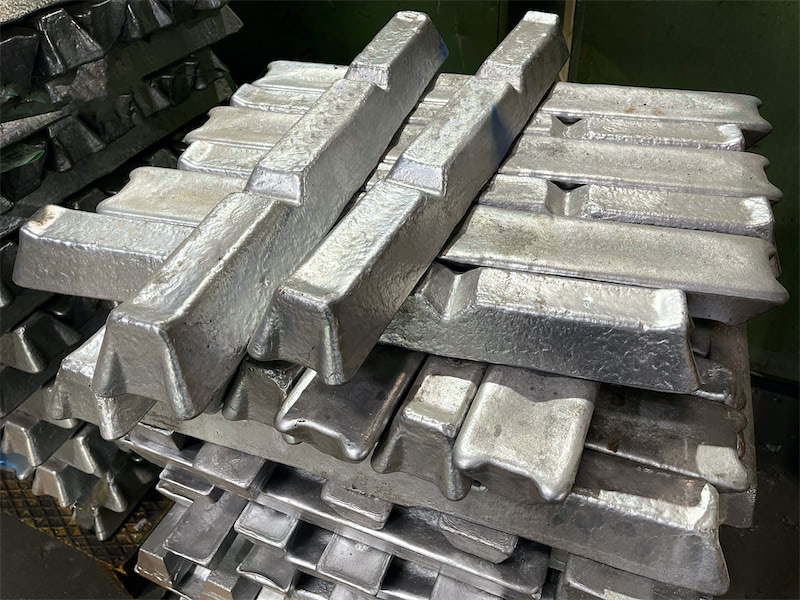
SMM April 9 update:
Macro perspective:
This week, the global macro front remained focused on geopolitical disruptions. On April 7 local time, US President Trump posted on social media: "I have agreed to a pause on the bombing and strikes on Iran for a period of two weeks." Subsequently, a White House official stated that Israel had agreed to a temporary ceasefire. On the other hand, Iran's Supreme National Security Council issued a statement saying that, based on the Supreme Leader's recommendation and the Council's approval, it accepted Pakistan's ceasefire proposal. After the US and Iran announced the ceasefire, most of the over a thousand vessels stranded in the Strait of Hormuz were still in a "wait-and-see" mode, with only a very small number passing through. Iran required all vessels to obtain permission before transiting the strait. US President Trump stated that the US was considering "joint management" of the Strait of Hormuz with Iran. Oman said it had signed an agreement not to charge vessels passing through the Strait of Hormuz. However, as of April 9, Iranian media reported that the Strait of Hormuz had been fully closed, forcing oil tankers to turn back. The US Fed's March meeting minutes indicated that more officials mentioned the possibility of rate hikes, and the Fed's mouthpiece noted that the ceasefire made the Fed's decision-making more difficult.
Fundamentals:
Supply side, ex-China, directly impacted by geopolitical conflicts, Middle Eastern aluminum enterprises cut production. Recently, the UAE's EGA and Bahrain's Alba were successively hit by missile strikes, with production facilities damaged. The extent of damage was still under comprehensive assessment. The market widely expected large-scale production cuts or even shutdowns, with the global aluminum supply gap expected to widen and concerns over ex-China supply continuing to escalate. In China, the proportion of liquid aluminum rebounded in March as downstream sectors fully resumed work after the holiday, surging 9.3 percentage points MoM to 73.7%, above early-month expectations. Entering the traditional peak consumption season in April, downstream operating rates continued to rise, and the proportion of liquid aluminum was expected to climb further. Inventory side, high aluminum prices in China suppressed downstream willingness to actively restock, with downstream enterprises generally purchasing as needed based on orders and maintaining low inventory operations, with no large-scale stockpiling behavior for now. On Thursday, China's aluminum ingot social inventory saw an inventory buildup of 35,000 mt WoW to 1.422 million mt, with short-term inventory still at a relatively ample level. Inventories outside China continued to decline, with LME aluminum inventory maintaining a downward trend this week, falling to 414,000 mt.
Overall:
On the macro front, although the US and Iran reached a temporary ceasefire agreement, the Strait of Hormuz had not resumed normal transit. Vessels still needed Iranian permission to navigate, with most ships remaining in a wait-and-see mode. Moreover, geopolitical conflicts carried the risk of spreading to surrounding areas, further intensifying market concerns over uncertainty in the Middle Eastern supply chain. Supply side, the substantial damage previously inflicted has become irreversible. Aluminum capacity in the Middle East suffered direct military strikes, with UAE's EGA and Bahrain's Alba successively attacked and production facilities damaged. The expected global aluminum supply gap has widened significantly, and ex-China supply concerns continue to escalate. Meanwhile, China has entered the traditional peak consumption season, with the proportion of liquid aluminum rebounding to around 74% and downstream operating rates rising steadily, providing solid demand-side support. Overall, macro-level risks of strait passage restrictions and conflict escalation resonate with fundamental supply hard damage and low global inventory, jointly providing strong floor support for aluminum prices. However, weak interest rate cut expectations, higher-than-expected domestic aluminum ingot inventory buildup, and adverse expectations on consumption and inflation from recent high oil price fluctuations have notably weighed on the upside room for aluminum prices, with aluminum prices fluctuating at highs in the short term.The most-traded SHFE aluminum contract is expected to trade in the range of 23,800-25,100 yuan/mt next week, while LME aluminum is expected to trade in the range of $3,350-3,530/mt.
![Futures Prices Pulled Back, Market Confidence in Prices Declined [SMM Spot Aluminum Midday Review]](https://imgqn.smm.cn/usercenter/bHIPd20251217171651.jpg)