[SMM Analysis]Battery Recycling and Reuse – Vehicle Battery Swapping

Published: Feb 28, 2026 15:50
Source: SMM
Enterprises must clarify the economic value of recycling and emphasize the final stage of the NEV value chain—recycling and utilization. This reveals an important trend: competition in the NEV sector has shifted from the first half focused on driving range and intelligence to the second half, which emphasizes refueling efficiency, life cycle costs, and environmental friendliness.
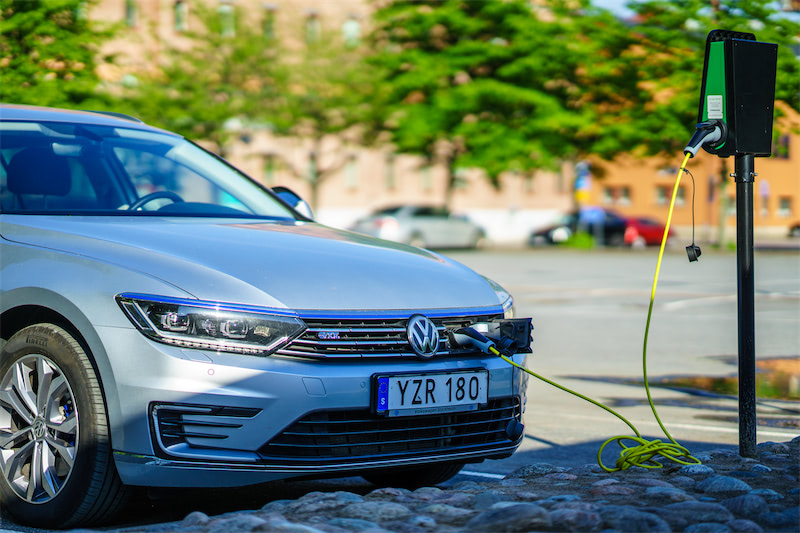
Previously, six departments including the Ministry of Industry and Information Technology jointly issued the "Interim Measures for the Recycling and Comprehensive Utilization of Waste Power Batteries from New Energy Vehicles" (hereinafter referred to as the "Management Measures"), which will officially take effect on April 1, 2026. One of the most notable aspects of the new regulations is the clarification that the "vehicle-battery integrated retirement" requirement does not apply to battery-swapping car models. While this may appear as a technical exception, it actually highlights the unique value of the battery-swapping model in establishing a green, closed-loop system throughout the NEV life cycle.

One of the core provisions of the "Management Measures" is that NEVs must be retired with their power batteries intact. If the power battery is missing at the time of retirement, the vehicle will be considered incomplete, and the retirement process cannot be completed normally. The original intent of this provision is to prevent retired vehicle power batteries from entering gray markets, thereby strengthening the control over scarce metal resources and enhancing environmental protection.

For car models adopting the battery-swapping model, the policy provides special consideration. In battery-swapping models, the vehicle and the battery are inherently separate. Battery health management, and ultimately environmentally friendly recycling, are the responsibility of the enterprise. Users only need to use the vehicle normally without worrying about battery recycling. This "exception" is not a means to evade regulation but rather stems from the fact that the battery-swapping model inherently establishes a clearer and more easily regulated battery circulation path.

Enterprises must clarify the economic value of recycling and emphasize the final stage of the NEV value chain—recycling and utilization. This reveals an important trend: competition in the NEV sector has shifted from the first half focused on driving range and intelligence to the second half, which emphasizes refueling efficiency, life cycle costs, and environmental friendliness. 
Data Source Statement: Except for publicly available information, all other data are processed by SMM based on publicly available information, market communication, and relying on SMM‘s internal database model. They are for reference only and do not constitute decision-making recommendations.

For any inquiries or to learn more information, please contact: lemonzhao@smm.cn
For more information on how to access our research reports, please contact:service.en@smm.cn
Related News
SK On And POSCO Sign Three-Year Lithium Supply Agreement
Common.Time.minsAgo
SK On And POSCO Sign Three-Year Lithium Supply Agreement
Read More
SK On And POSCO Sign Three-Year Lithium Supply Agreement
On February 26, foreign media reported that POSCO and SK On have signed a long-term lithium supply agreement aimed at stabilizing the battery materials supply chain. According to the agreement, POSCO will supply SK On with over 25,000 tons of lithium from 2026 to 2028. This volume is sufficient to produce batteries for approximately 400,000 electric vehicles. It is understood that the lithium will be produced at POSCO Argentina SAU's Hombre Muerto salt flat in Salta Province, Argentina. Meanwhile, SK On indicated that the lithium could potentially also be used for energy storage systems.
Common.Time.minsAgo
Rongbai Technology Reports 2025 Net Loss Attributable To Parent Of 182 Million Yuan
Common.Time.minsAgo
Rongbai Technology Reports 2025 Net Loss Attributable To Parent Of 182 Million Yuan
Read More
Rongbai Technology Reports 2025 Net Loss Attributable To Parent Of 182 Million Yuan
On February 28, 2026, Rongbai Technology released its 2025 annual performance report. In 2025, Rongbai Technology achieved operating revenue of 12.271 billion yuan, a decrease of 18.67%; and recorded a net loss attributable to shareholders of the listed company of 182 million yuan, a decrease of 161.64%. In 2025, due to multiple factors such as intensified domestic market competition and changes in the international political and economic landscape, the company's operating performance faced interim pressure, with operating revenue of 12.271 billion yuan and a net loss attributable to the parent of 182 million yuan. However, quarterly profitability gradually recovered, and the company returned to profitability in the fourth quarter.
Common.Time.minsAgo
During the "15th Five-Year Plan" period, State Grid Corporation of China will put 15 UHV DC projects into operation
Common.Time.minsAgo
During the "15th Five-Year Plan" period, State Grid Corporation of China will put 15 UHV DC projects into operation
Read More
During the "15th Five-Year Plan" period, State Grid Corporation of China will put 15 UHV DC projects into operation
According to State Grid Corporation of China, during the "15th Five-Year Plan" period, State Grid will strengthen the power grid's resource allocation capacity, enhance its ability to accommodate new energy, and support the high-quality development of new energy. It is reported that during the "15th Five-Year Plan" period, State Grid will strengthen the construction of power grids at all levels, strive to put 15 UHV DC projects into operation, increase inter-provincial power transmission capacity by 35%, expand flexible power exchange capabilities between regions by more than double, and meet the needs for efficient large-scale allocation of new energy.
Common.Time.minsAgo