[SMM Analysis] Hormuz Crisis: Methanol Supply Risks and the Rising Strategic Value of Green Methanol

Published: Mar 6, 2026 17:18
A blocked Strait of Hormuz would upend global methanol supplies, hammer conventional methanol markets, and elevate green methanol’s strategic value, pushing China to diversify imports and boost green methanol for supply security.

A blockade in the Strait of Hormuz would cut off Persian Gulf oil and gas exports and cripple Middle Eastern methanol production at the source. As China relies heavily on Middle Eastern methanol, the conventional market would face a double shock from surging costs and supply shortages. Meanwhile, green methanol’s strategic value as an energy security "safe haven" will be revalued, supported by local supply chains and long‑term contracts.

I. Supply Chain Vulnerability

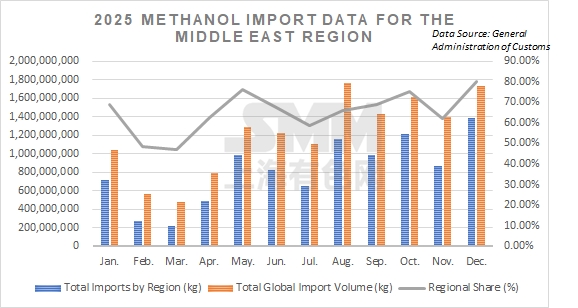
China’s methanol imports are highly concentrated in the Middle East, which accounts for 60%–70% of total inflows. Iran alone contributes nearly 40%–50% via transshipment despite sanctions. A Strait closure would not only halt shipping but also force Middle Eastern gas‑fed methanol plants to shut down, cutting off nearly half of China’s overseas supply.The Strait handles over 80% of Asian methanol imports. A shutdown would send vessel and insurance costs soaring, quickly turning tight supply into a full‑blown shortage.
II. Diverging Price Trends
Conventional methanol will face a squeeze from soaring gas costs and lost Iranian supply, with high prices likely to persist long after normal shipping resumes.Green methanol will outperform with greater stability. Fed by biomass or renewable power, it is decoupled from global oil and gas markets. Most projects use 5–10 year off‑take agreements, providing strong price resilience. As conventional prices spike, green methanol will become far more competitive, even turning cost‑effective under carbon pricing.

III. Strategic Security Shift
The crisis exposes the risks of an over‑concentrated supply chain. To improve security:Diversify imports away from the Middle East.Strengthen domestic production and build national strategic reserves.Scale up green methanol to create an independent, local, and controllable supply system.This is key to mitigating geopolitical risks and securing long‑term methanol supply stability.
Data Source Statement: Except for publicly available information, all other data are processed by SMM based on publicly available information, market communication, and relying on SMM‘s internal database model. They are for reference only and do not constitute decision-making recommendations.

For any inquiries or to learn more information, please contact: lemonzhao@smm.cn
For more information on how to access our research reports, please contact:service.en@smm.cn
Related News
Sudden Turmoil in the Strait of Hormuz Is Reshaping the Global Phosphorus Chemical Landscap
Common.Time.hoursAgo
Sudden Turmoil in the Strait of Hormuz Is Reshaping the Global Phosphorus Chemical Landscap
Read More
Sudden Turmoil in the Strait of Hormuz Is Reshaping the Global Phosphorus Chemical Landscap
Geopolitical conflict in the Middle East led to a blockade of the Strait of Hormuz, cutting off the global sulphur supply chain (China’s import dependence exceeds 50%, with the Middle East accounting for 56%). Sulphur prices surged to 4,395 yuan/mt, directly pushing up phosphate fertiliser costs. Rigid demand from spring ploughing provided support, but China’s policies to ensure supply and stabilise prices curbed phosphate fertiliser gains。
Common.Time.hoursAgo
China Launches First Large-Scale Cross-Grid Green Electricity Trading, Delivering 314M kWh to Eastern Provinces
Common.Time.hoursAgo
China Launches First Large-Scale Cross-Grid Green Electricity Trading, Delivering 314M kWh to Eastern Provinces
Read More
China Launches First Large-Scale Cross-Grid Green Electricity Trading, Delivering 314M kWh to Eastern Provinces
This year, China will carry out the first large-scale green electricity trading across power grid operation areas. On March 6, it was learned from the Guangzhou Electric Power Trading Center that from today (6th), green electricity from Guangxi and Yunnan will be delivered to East China through market-oriented transactions, which is also the first large-scale cross-power grid green electricity transaction in China this year. It is understood that through the Guangzhou and Beijing power trading centers, green electricity from Guangxi and Yunnan will continue to flow into Shanghai, Jiangsu, Zhejiang, Fujian and other places from today until March 31. The transaction will generate 314 million kWh of electricity, 100% of which will be green electricity, with wind power accounting for 90% and p
Common.Time.hoursAgo
Gulf disruption squeezes Indonesia nickel makers' sulphur supply
Mar 6, 2026 23:12
Gulf disruption squeezes Indonesia nickel makers' sulphur supply
Read More
Gulf disruption squeezes Indonesia nickel makers' sulphur supply
Due to the conflict in the Middle East, shipping through the Strait of Hormuz has been disrupted, raising the risk of tighter global sulphur supplies. Indonesia relies on the Middle East for around 75% of its sulphur imports, and sulphur is a key raw material for producing sulphuric acid, which is essential for leaching metals in nickel and copper processing. Analysts note that sulphur inventories at Indonesia’s HPAL nickel plants typically cover only one to two months of consumption. If transport disruptions persist, some plants may be forced to cut production as early as next month. Overall, if shipping disruptions in the Middle East continue for more than a few weeks, production and demand for related metals may need to slow.
Mar 6, 2026 23:12