It takes time for aluminium consumption to recover notably, despite upcoming peak season

Published: Aug 31, 2020 14:13
Aluminium foil demand remains in the peak season, while demand for aluminium extrusion, plate/sheet, strip and aluminium alloy ingots has showed signs of mild recovery.

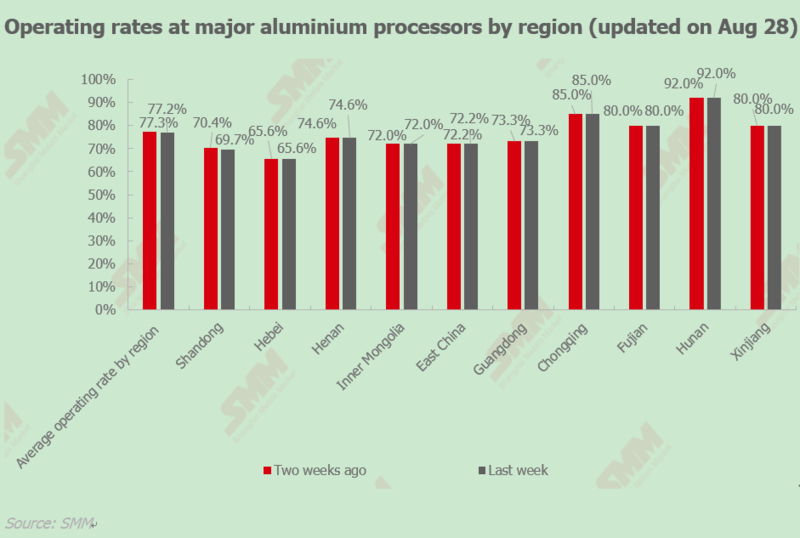
SHANGHAI, Aug 31 (SMM) — Operating rates across major aluminium processors dipped 0.1 percentage point on a weekly basis to 77.2% last week, but are likely to rebound slightly this week. Aluminium foil demand remains in the peak season, while demand for aluminium extrusion, plate/sheet, strip and aluminium alloy ingots has showed signs of mild recovery. However, export exports did not improve significantly. Lower supply of imported aluminium scrap and aluminium alloy ingots fueled bullish sentiment among secondary casting aluminium alloy producers. Some aluminium billet producers that use re-melted aluminium scrap as raw materials were closed.
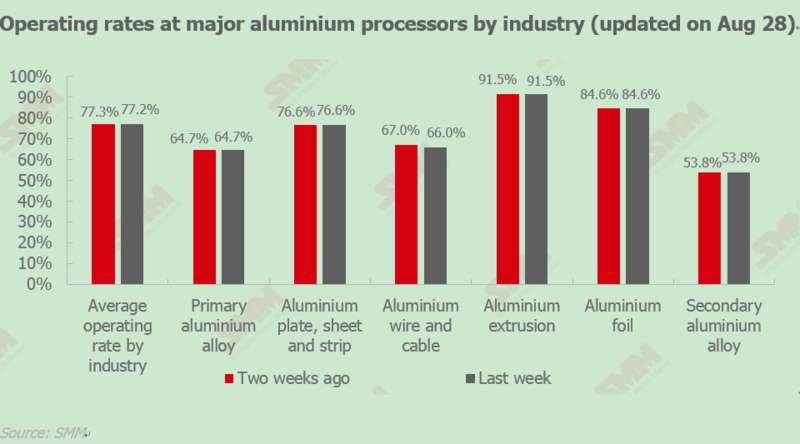


Aluminium plate/sheet and strip: Demand for construction decorative plate and strip remained stable. Orders for can stock and tab stock weakened slightly, but were sufficient for production throughout August. Demand for automotive sheet gradually improved. Export orders remained weak.


Aluminium foil: Sufficient backlog orders for air-conditioner foil and heavy-gauge foil kept production stable, but new orders began to fall. Orders for light-gauge soft packaging foil remained ample. Orders for electronics foil and battery foil gradually recovered. Export orders did not increase notably.


Aluminium wire and cable: Slower construction under high temperatures prompted State Grid to slow down taking deliveries, which in turn pushed up finished product inventories at wire aluminium wire and cable producers. As tenders for aluminium stranded wire from State Grid remained limited, wire and cable producers continued to process backlog orders and are concerned about future orders.


Aluminium extrusion: Orders on hand at large producers could sustain production for a month, while orders at small and medium-scale producers showed signs of improving. Exports rose significantly in July when compared to June, but continued to decline on a yearly basis. Exports accounted for just a small share of total consumption. Producers kept raw material stocks at normal levels and expect consumption in September to improve from August.   


Primary aluminium alloy: Several large wheel plants closed for maintenance for a week, but will return to normal production in September. Both primary aluminium alloy and wheel plants are optimistic over demand in September as September-October is the traditional peak season. As overseas demand for aluminium wheels is also recovering, oversupply of primary aluminium alloy is likely to ease.  


Secondary aluminium alloy: As there are no signs of aluminium scrap import restrictions being loosened for the foreseeable future and high overseas prices have kept the import window of aluminium alloy ingots closed, secondary aluminium producers that rely heavily on imported scrap are increasingly concerned about raw material supply. Supply of aluminium scrap tense (Al<98%) tightened in coastal areas. Sluggish orders at small and medium-scale aluminium extrusion producers kept demand weak for aluminium billets made with re-melted aluminium scrap. Secondary aluminium producers reported increasing inquiries from die-castings plants, but this does not indicate significant improvement of downstream demand. Operating rates are expected to remain stable this week.   
Data Source Statement: Except for publicly available information, all other data are processed by SMM based on publicly available information, market communication, and relying on SMM‘s internal database model. They are for reference only and do not constitute decision-making recommendations.

For any inquiries or to learn more information, please contact: lemonzhao@smm.cn
For more information on how to access our research reports, please contact:service.en@smm.cn
Related News
Fed Governor Milan Pushes for Over 100 Basis Points Cut, Contradicts Barkin on Caution
23 hours ago
Fed Governor Milan Pushes for Over 100 Basis Points Cut, Contradicts Barkin on Caution
Read More
Fed Governor Milan Pushes for Over 100 Basis Points Cut, Contradicts Barkin on Caution
Federal Reserve Governor Milan pointed out that it is necessary for the US Fed to cut interest rates by more than 100 basis points this year. At the same time, he is very much looking forward to the performance of Kevin Warsh as Fed Chairman. However, Richmond Fed President Barkin emphasized that monetary policy must remain cautious until inflation fully pulls back to the target level, thereby ensuring the stability of the labour market.
23 hours ago
Democratic Senators Demand Delay in Fed Nomination Amid Criminal Investigation
23 hours ago
Democratic Senators Demand Delay in Fed Nomination Amid Criminal Investigation
Read More
Democratic Senators Demand Delay in Fed Nomination Amid Criminal Investigation
All 11 Democratic members of the US Senate Banking Committee jointly sent a letter to the committee's chairman, Tim Scott, requesting that all nomination processes for the prospective Fed Chairman, Kevin Warsh, be postponed until the criminal investigation into current Fed Chairman Powell and other board members is concluded. However, Scott stated that Warsh's confirmation was a done deal.
23 hours ago
Fed to Keep Large Banks' Capital Levels Unchanged, Postpones Stress Test Reforms Until 2027
23 hours ago
Fed to Keep Large Banks' Capital Levels Unchanged, Postpones Stress Test Reforms Until 2027
Read More
Fed to Keep Large Banks' Capital Levels Unchanged, Postpones Stress Test Reforms Until 2027
The US Fed has announced that it will maintain the capital levels of large banks unchanged during the upcoming stress test cycle (corresponding to the 2026 cycle). At the same time, the US Fed is planning multidimensional reforms to this annual test, aiming to enhance its transparency. The US Fed's Vice Chair for Supervision, Bowman, revealed that adjustments to the stress capital buffer requirements for large banks will be postponed until 2027. This move is intended to provide the US Fed with sufficient time to evaluate potential flaws that may be exposed in its testing models when assessing banks' financial conditions under simulated economic downturn scenarios.
23 hours ago